Your Gym Is Digitized. It's Not Digitalized. That's the Problem.
Most gyms have software. Almost none have digital commerce. The distinction between digitizing and digitalizing explains why your ads aren't working and your revenue has a ceiling.

You're spending money on ads. You're posting on social media. Last month you ran a promotion — 50% off the first month, or a discounted intro class pack. A few people signed up. Revenue didn't really move.
So you assume the problem is demand. Not enough people know about your gym or studio. If you could just get more eyeballs, more clicks, more walk-ins, things would turn around.
That's not the problem.
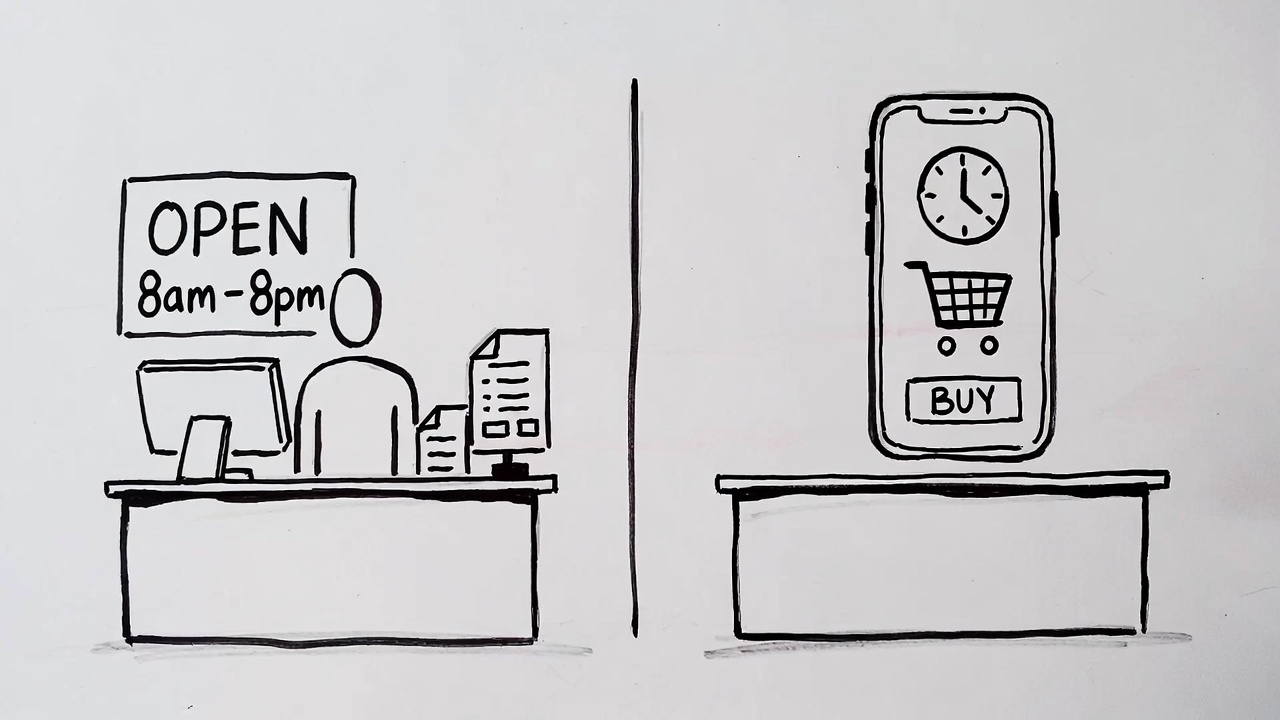
Your gym or studio can only sell to people who are physically present during staffed hours. That's a commerce ceiling. No amount of advertising lifts it.
How Your Business Actually Sells Today
Think about how someone buys from you right now.
A prospect sees your Instagram ad at 9pm. They're interested. They click through to your website, see your membership options or class schedule. They're ready to act.
Now what?
"Call us." "Stop by the front desk." "Fill out this form and someone will get back to you." Maybe there's a link that sends them into a third-party platform they've never heard of, asking them to create an account before they can see a single price.
The moment passes. They close the tab, meaning to come by on Saturday. They never do. The ad worked — the demand was real. But the purchasing channel didn't exist.
This pattern plays out across every revenue line. A member wants to buy a guest pass for a friend visiting this weekend — they'll ask at the front desk next time they're in. Maybe. Someone wants to book a drop-in class or a private session — they send a DM, and the instructor responds four hours later. A trainer wants to sell a session package to a client who just said yes after class — they write it down and deal with it later at the computer.
Every one of these is revenue gated by physical presence and staff availability. Your earning capacity is bounded by how many of these human interactions your team can facilitate per day.
The Retail Parallel
Independent retail had this exact ceiling. Revenue equaled foot traffic times conversion. Stores could only sell to the people who physically walked in.
Shopify didn't create demand for independent retail products. It expanded distribution. Same store, same products — but now anyone with a phone could browse and buy at 2am. The physical storefront became one sales channel among several, instead of the only one. Millions of small retailers went from selling to their neighborhood to selling to anyone with an internet connection, without changing their product, their brand, or their staff.
Gym and studio commerce is at this inflection point right now. The product — your space, your community, your coaching, your classes — is excellent. The way that product gets sold hasn't changed in twenty years.
Digitizing Is Not Digitalizing
Most gyms and studios have software. Having software is not the same thing as having digital commerce.
There's a useful distinction here. Digitizing means converting analog things into digital format. Paper waivers become PDFs. Cash registers become POS terminals. The class schedule goes on a website. Most gyms and studios have done this part.
Digitalizing means changing the underlying process itself. A prospect doesn't just see your membership options online — they purchase one. A member doesn't just view the class schedule — they buy a 10-class pack and book their first session. A visitor doesn't just know you offer guest passes — they buy one from their phone before they arrive.
Digitizing makes your existing operations slightly more efficient. Digitalizing expands what your business can sell, to whom, and when.
When the commerce layer is fully digital, your gym or studio has a branded storefront where everything you sell — memberships, class packages, guest passes, drop-in classes, private sessions — is purchasable at any hour, from any device. A returning member checks out in seconds because they're already recognized. A new customer enters their phone number and card once. Your business is open for commerce even when the physical doors are closed.
Why Ads and Discounts Don't Fix This
This is why the ads aren't working the way you expected.
Ads solve an awareness problem. They put your gym or studio in front of people who didn't know about it. Discounts solve a price sensitivity problem. They lower the barrier for someone on the fence.
Neither one solves a distribution problem.
If the person who clicks your ad can't complete the purchase right then — from their phone, in under a minute — the ad spend leaks. You paid to generate demand and then had no channel to capture it. The prospect has to remember to call, visit, or come back to the website later. Most won't.
Think of it like a restaurant that runs Instagram ads but has no DoorDash, no Uber Eats, no online ordering of any kind. The ads work — people see the food, they want it. But the only way to buy is to drive there, park, and order at the counter. The restaurant's revenue is permanently capped at the number of people who physically walk through the door. The marketing budget grows, the menu gets better, the food photos get more likes — and revenue stays flat, because the purchasing channel never expanded. The restaurant didn't have a demand problem. It had a distribution problem.
That is the exact situation most gyms and studios are in today.
Lowering prices is worse, because it shrinks your margin without touching the structural bottleneck. You sell the same number of memberships or class packs to the same walk-in audience — just at a lower price point.
What Happens When the Ceiling Lifts
When the commerce layer goes digital, three things compound at once.
Your customer reach expands. The acquisition surface grows beyond foot traffic and phone calls. Someone who discovers your studio at midnight can buy a class pack at midnight.
Revenue per customer increases. Members can browse and buy — additional class packages, guest passes for friends, private sessions — whenever they think of it, not just when they happen to be at the front desk.
Transaction costs drop. Routine purchases don't require staff to process them. Your team spends their time coaching and building community instead of answering "how do I sign up?" and running credit cards.
Nothing about the business changes except how commerce flows through it — and how far that commerce can reach.
The Bottom Line
The gyms and studios that figure this out won't look different from the outside. Same space, same community, same coaching.
But their commerce runs around the clock, reaches beyond the front door, and converts demand the moment it appears. The ceiling lifts, and revenue follows.
See how Gymsense can replace add-ons, simplify daily operations, and give your members a better way to buy, check in, and manage their account.
Talk to us