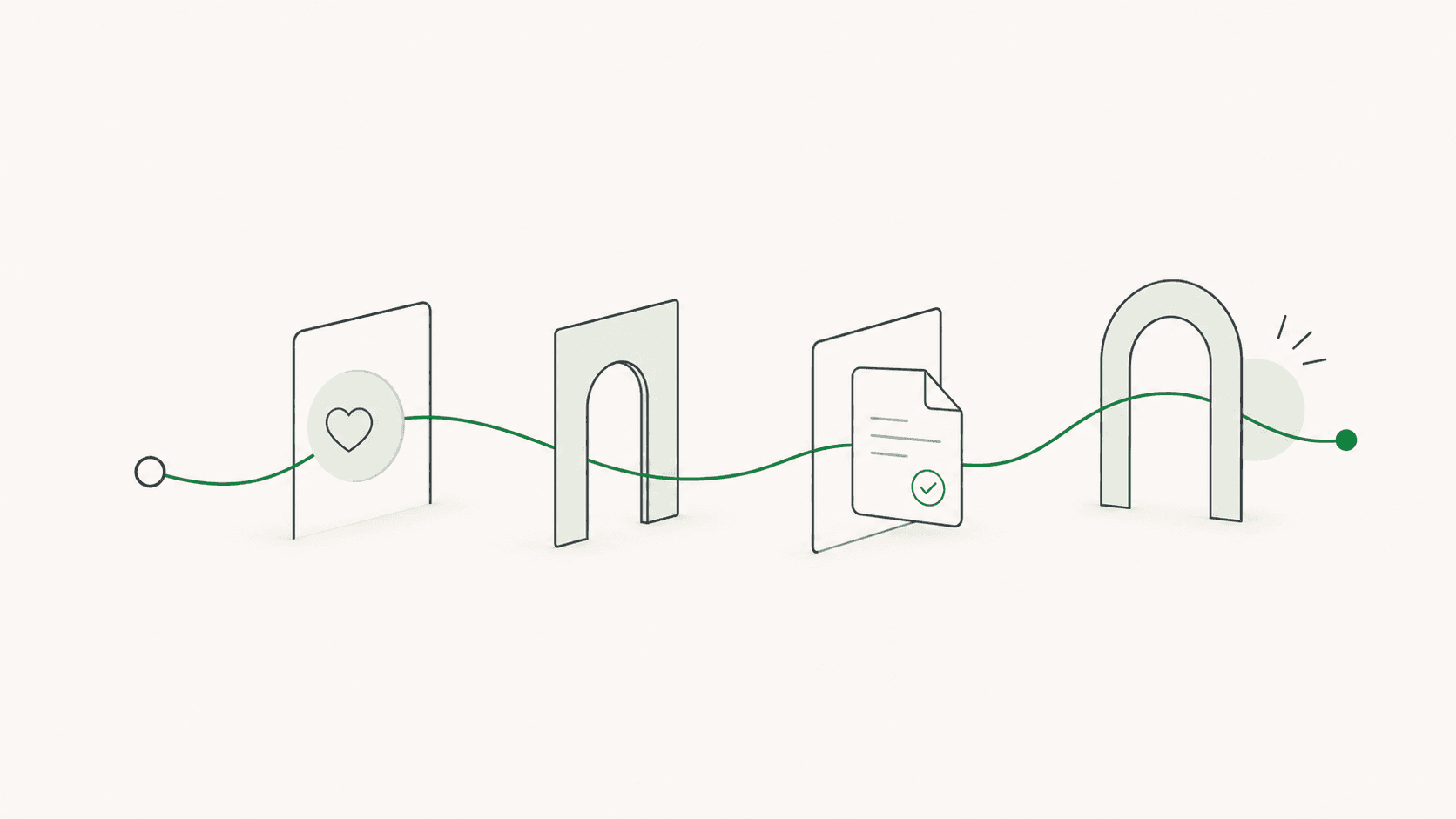
Audit the Way Someone Buys From Your Gym
Can a gym operate without a website? Use this practical audit to find gaps from discovery and tours through payment, waivers, and the first visit.

A gym website can look polished while leaving a prospective member with no clear way to move forward.
That does not always mean the gym needs a new website. It may mean the buying path is incomplete.
Someone can discover a neighborhood gym through Google Maps, Instagram, a friend, or a sign on the street. The owner may reasonably want to meet that person, give them a tour, and talk before they join. The problem starts when each step after that depends on the prospect waiting, guessing, repeating information, or catching the right person at the right time.
This audit follows the whole path from first discovery through the first visit. Use it on a phone, as if you know nothing about the gym.
Map the buying path before you change the website
Write down what happens at each stage today. Do not describe the intended process. Follow the links, submit the forms, and ask staff what actually happens next.
| Stage | The prospective member needs | The gym needs |
|---|---|---|
| Discovery | Confidence that this is the right kind of gym, in the right place | Accurate listings, hours, photos, and a clear next step |
| Evaluation | Enough detail about the experience, coaching, schedule, and price to keep considering it | A consistent explanation of what the gym offers |
| Conversation or tour | A simple way to ask a question or arrange a visit | One owner for the inquiry and a visible follow-up record |
| Decision | A clear offer and an understanding of what happens next | The selected product, price, start date, and any approved exception |
| Payment and agreement | A trustworthy way to pay and sign from a phone | A successful payment and the correct signed documents |
| Member setup | Confirmation that the purchase is complete | One member record with billing, access, and contact details |
| First visit | Clear arrival, access, and support instructions | Staff who can see what the member bought and what remains |
A gap in any row becomes work for the prospect or the staff. Several small gaps in sequence can make a warm referral feel surprisingly difficult to complete.
1. Start where people actually discover the gym
Search for the gym by name and with a local phrase such as “gym near me.” Then check the Instagram profile and any link a member would naturally share.
Confirm that each starting point has:
- the correct location and staffed hours
- current photos that reflect the real gym
- a plain description of who the gym is for
- one obvious next step
- a link that works on a phone
The next step does not have to be “buy now.” It might be “arrange a tour,” “see memberships,” or “message the owner.” It does need to match what happens after the tap.
If the Google listing says “Join online” but the link opens a general homepage, the path has already broken. If Instagram says “DM us” but nobody owns the inbox, the path depends on luck.
2. Keep a personal tour when it helps the decision
Some gyms should not turn every prospect into a self-service transaction.
A tour can help the owner understand what the person needs, introduce the culture, explain how coaching works, and make sure the gym is a good fit. That conversation is part of the product, not friction to remove.
Audit the administration around it:
- Can the person choose or request a time without several messages?
- Does one person own the inquiry?
- Can another staff member see the conversation?
- Does the prospect receive the address, parking details, and arrival instructions?
- After the tour, is the agreed membership and price written down?
- If the person is not ready, is the next follow-up clear?
The goal is not to eliminate the conversation. It is to prevent scheduling and follow-up from depending on one person’s memory.
3. Make the offer understandable before asking for commitment
A prospective member should be able to answer:
- What am I buying?
- What does it cost now?
- Will it renew, and when?
- Is there a commitment period?
- When can I begin?
- What happens if I need to pause or cancel?
The answers may appear online, during a tour, or in a written proposal. What matters is that the offer shown at payment matches the offer the person understood.
Pay special attention to grandfathered prices, family plans, limited memberships, class packages, personal training, joining fees, and introductory periods. These are common places for the conversation, checkout, agreement, and billing record to disagree.
4. Test the commitment step on a phone
Choose the most common membership and try to complete the next step without staff help.
Look for:
- a clear product name and total due today
- billing terms before payment
- no unexpected account wall
- no request to re-enter information the gym already has
- the gym’s name and identity throughout the process
- a working payment experience at mobile size
- a useful confirmation when the step is complete
Count how many times the person must change channels. A path that goes from Instagram to a website, then to a third-party login, then back to email, then to a call creates uncertainty even when every individual tool technically works.
If payment intentionally happens after a tour, test the link the prospect receives after saying yes. That handoff matters just as much as a public checkout button.
5. Check that payment, agreement, and member setup agree
A successful charge is not the end of the path.
After the person commits, the gym should have one reliable record of:
- the member’s name and contact information
- the membership, package, or service purchased
- the agreed price and billing schedule
- the effective start date
- the signed agreement and waiver
- payment status
- access or booking eligibility
- any remaining setup work
Test what happens when one part is incomplete. Can a person pay but miss the waiver? Can an agreement be signed without a usable member record? Can access begin before staff know the purchase succeeded?
The system should make incomplete work visible. Otherwise the first visit becomes the moment when staff discover the missing detail in front of the new member.
6. Finish the path at the first visit
Review the confirmation a new member receives. It should explain:
- when and where to arrive
- how to enter or check in
- what to bring
- who to ask for
- how to get help if something does not work
Then check the staff side. The person greeting the member should be able to see what they purchased, whether payment and documents are complete, and whether any promise or exception was made.
A smooth first visit does not need to feel automated. It should feel prepared.
Score the current path
Give each stage a score from 0 to 2.
| Score | Meaning |
|---|---|
| 0 | The step is missing, misleading, or depends on the prospect figuring it out |
| 1 | The step works, but requires manual rescue, repeated information, or staff memory |
| 2 | The next action, owner, record, and completion state are clear |
There are seven stages, so the highest possible score is 14. The total is less important than the first zero.
Fix the earliest zero first. Improving checkout will not help if prospects cannot find the right offer. Rebuilding the homepage will not help if a person who says yes still waits two days for a payment link.
Can a gym operate without a website?
A gym can begin without a traditional multi-page website. Google Business Profile, Instagram, referrals, and direct messages may provide enough discovery for a small owner-led business.
It still needs a dependable destination for the next action. That may be a focused page for arranging a tour, a clear membership page, a branded purchase link, or a small collection of pages that answer the questions people repeatedly ask.
The distinction is useful: a website publishes information; a buying path helps a person make a decision and complete it. A gym with no website but a clear, trustworthy path may serve a prospect better than a gym with an expensive site that ends in “contact us.”
As the gym grows, an owned website becomes more valuable for local search visibility, stable information, useful resources, and control over the relationship. Build or improve it around the path people actually take rather than treating the homepage as the project.
Repair the path in this order
- Correct the information people see on Google and social profiles.
- Choose one honest next step for each discovery source.
- Assign an owner and visible record to tours and inquiries.
- Write down the exact offer before payment.
- Make payment and agreement completion work on a phone.
- Create one complete member record.
- Send useful first-visit instructions and make the record visible to staff.
Retest from the beginning after each change. The practical measure is not whether the new page looks better. It is whether a real person can move forward without an unexplained pause.
Want to talk it through?
If you want another gym operator's perspective on finding and fixing gaps in your gym's buying path, message us on Instagram. Brian replies personally.
Frequently Asked Questions
Does every gym need a website?
Not necessarily at the beginning. A small gym can be discovered through Google, Instagram, referrals, and local reputation. It still needs a reliable place for a prospect to take the next step. Over time, an owned website is useful for search visibility, stable information, and control.
Can a gym sell memberships without a website?
Yes. A gym can send a prospective member directly to a focused membership, tour, or purchase page. The page should clearly identify the gym, explain the offer and billing terms, work on a phone, and connect the completed action to a reliable member record.
Should every prospect be able to join without speaking to anyone?
No. A personal conversation or tour may be an intentional and valuable part of joining a neighborhood gym. Automate the scheduling, payment, documents, records, and follow-up around that interaction rather than removing the interaction itself.
What should a gym fix first: its homepage or its checkout?
Follow the path and fix the earliest point where a prospect cannot confidently continue. That may be an inaccurate Google listing, an unclear offer, an unowned inquiry, or a broken payment handoff. The earliest gap limits everything after it.
How should a gym measure its online buying path?
Track meaningful transitions: discovery-page visits, tour or contact requests, completed decisions, successful payments, completed agreements, and first visits. Also review where staff must manually rescue the process. Those interventions often reveal gaps that a simple website-traffic report misses.